
Mobility - The Movements That Carry Us
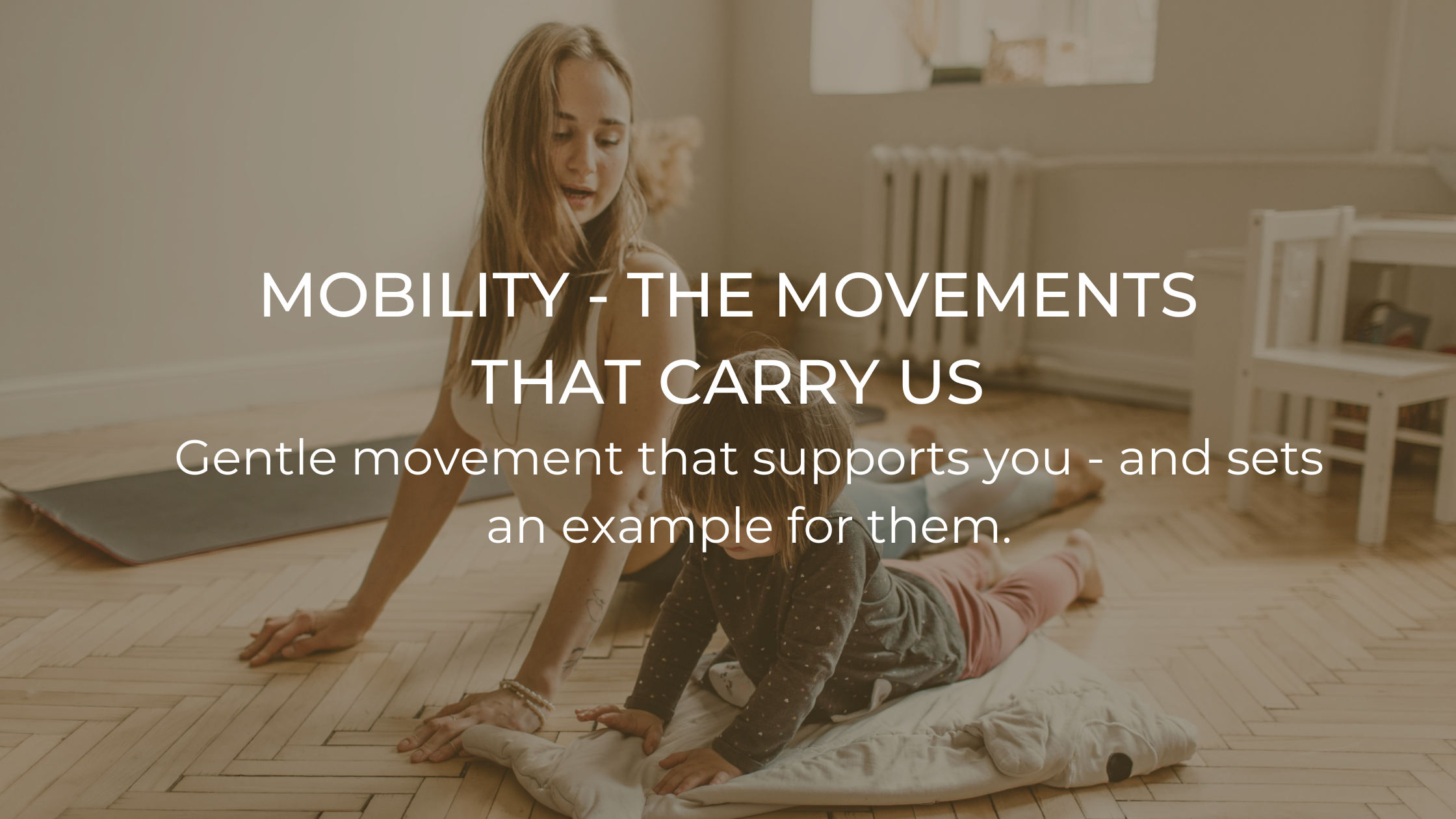
Movement that supports you — and shows them how.
Micro‑movements — the stretches, breaths, and little resets — keep us grounded through the day. But mobility, those bigger intentional ways we move, is what helps us feel stronger, clearer, and more resilient over time. A walk, a yoga flow, a swim, or even dancing in your kitchen — it’s not about “exercise,” it’s about giving your body freedom to move with ease. The small and the big together create a rhythm that supports us daily.
Why Mobility Matters
Mobility touches so many parts of our health:
It keeps blood flowing and energy steady.
It supports muscles and joints, so everyday tasks feel easier.
It clears the mind, reduces stress, and sharpens focus.
It builds resilience so we can adapt to life’s demands.
And it lifts mood — those endorphins remind you that you’ve done something good for yourself, leaving you lighter and more positive.
Mobility Can Be Simple
It doesn’t need to be complicated or time‑consuming. Start small and build it into your routine:
Lay out a foam roller or mat the night before so it’s ready.
Begin with 5 minutes in the morning. If it feels good, grow to 10, 15, or 20.
Roll tight muscles or stretch gently to release tension.
Rotate focus: upper body one day, lower the next, then whole‑body stretches.
Warm up stiff muscles with simple moves — reaching for your toes while seated, keeping your core engaged, or light mobility stretches.
Try adding little moves around daily habits: 5 sit‑ups after brushing your teeth. Twice a day makes 10 without effort. By keeping the count small, it feels achievable, and you’re less likely to miss a day. That consistency makes it sustainable, guilt‑free, and gradually builds into a habit that can grow when you’re ready.
Do them with intention. Focus on each movement and see it as your me time — a way to show care for yourself.
And remember, these little movements can also serve as an example for our kids. When they see us stretching or rolling on the mat, it shows them that looking after their bodies can be simple, fun, and part of everyday life.
Examples of Gentle Mobility
Mobility can be as simple as:
Rotating your head slowly to release neck tension.
Opening your hips with gentle stretches.
Stretching your back to ease stiffness.
Gentle strengthening for pelvic floor and lower back — bridges, bird‑dogs, or supported extensions that build stability while easing tightness.
These light movements don’t need equipment, and they remind your body what freedom of movement feels like.
Examples of Broader Mobility Practices
Mobility can look different for everyone:
A brisk walk that clears your head.
Yoga flows that open tight hips and shoulders.
Swimming or cycling for endurance.
Strength training for stability and confidence.
Dancing for joy and release.
Barriers & Gentle Reframes
We often hold back because of time, motivation, or perfectionism. But mobility doesn’t have to be long or intense.
Five minutes count.
Consistency matters more than performance.
Choose what feels good, not what you “should” do.
Mobility isn’t about doing it perfectly. It’s about weaving movement into your life in ways that feel good, both small and big. When we combine micro‑movements with bigger mobility practices, we create a rhythm that supports health, energy, and presence — and leaves us with that endorphin glow that reminds us we’ve done something good for ourselves.
💬 What kind of mobility feels good for you right now?
I share more gentle wellness content over on Substack — join me there → Read here
